
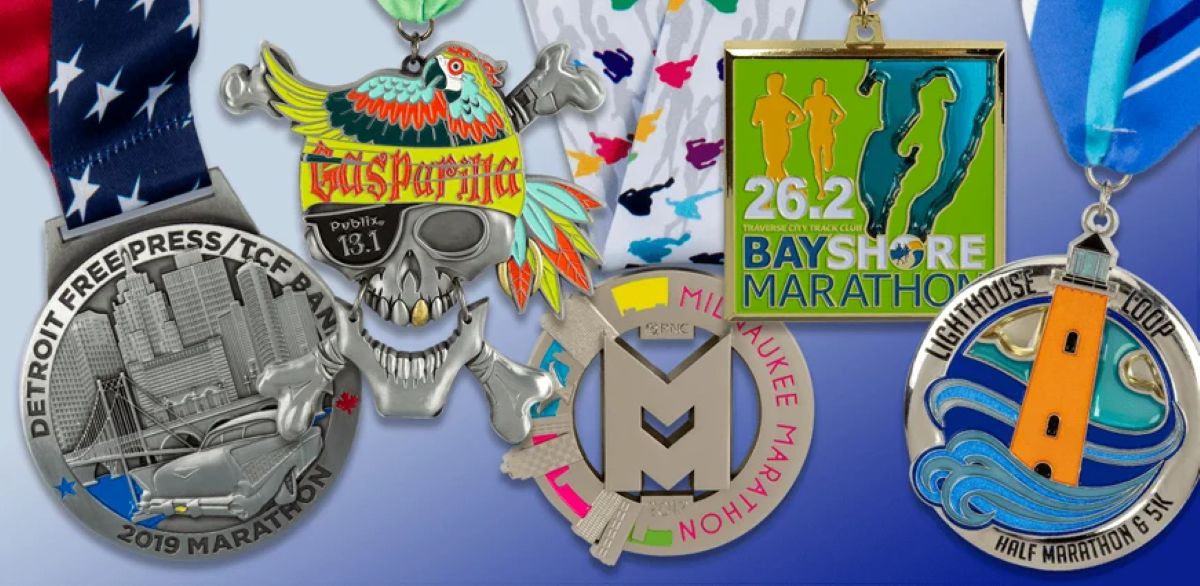
Awards turn race events from simple competitions into unforgettable experiences that participants cherish long after crossing the finish line. Whether runners complete their first 5K or triumph in an ultramarathon, the recognition they receive validates their effort and dedication.
Custom event medals and trophies are the two main award choices for race organisers. Medals usually celebrate participation and completion, given to every finisher who conquers the distance. Trophies, on the other hand, acknowledge outstanding performance—reserved for podium finishers, age group winners, or athletes who achieve specific milestones.
The decision between these award types holds great importance. Race organisers must balance participant expectations, budget limitations, sustainability commitments, and marketing goals. A local fun run giving out 500 finisher medals has very different considerations than a championship event presenting 20 trophies to category winners.
This analysis looks at custom event medals vs. trophies from various perspectives important to race organisers. We’ll discuss customisation options, cost structures, environmental impact, and strategic value. The aim is to provide organisers with clear insights to choose the best award options for their specific event requirements and participant demographics.
What Are Custom Event Medals and How Are They Used in Races?
Custom event medals are physical awards given to participants in running events, serving as tangible recognition of their achievement. Race organisers use these marathon medals across various event formats including 5K fun runs, half marathons, full marathons, ultramarathons exceeding 50 kilometres, and challenging trail runs through natural terrain.
Where Marathon Medals Make the Most Impact
Large-scale city marathons like the Melbourne Marathon distribute tens of thousands of personalised medals annually, making them the go-to choice for events expecting substantial participant numbers. Ultramarathon organisers prefer these awards because they acknowledge the extraordinary endurance required to complete distances beyond the standard marathon. Trail running events incorporate medals featuring nature-inspired designs that reflect the rugged environments where these races take place.
Community 5K events particularly benefit from custom event medals as they transform casual participants into committed finishers who treasure their accomplishment. The physical weight and design of these race keepsakes create lasting memories that encourage repeat participation in subsequent years.
Personalisation Techniques That Elevate Medal Design
Modern manufacturing offers race organisers multiple ways to customise:
- Full-colour UV printing allows photographic-quality images, gradients, and complex artwork directly onto medal surfaces
- Laser engraving creates permanent, precise details including event names, dates, and individual runner information
- Enamel colour filling adds vibrant, durable colours that resist fading and maintain visual appeal
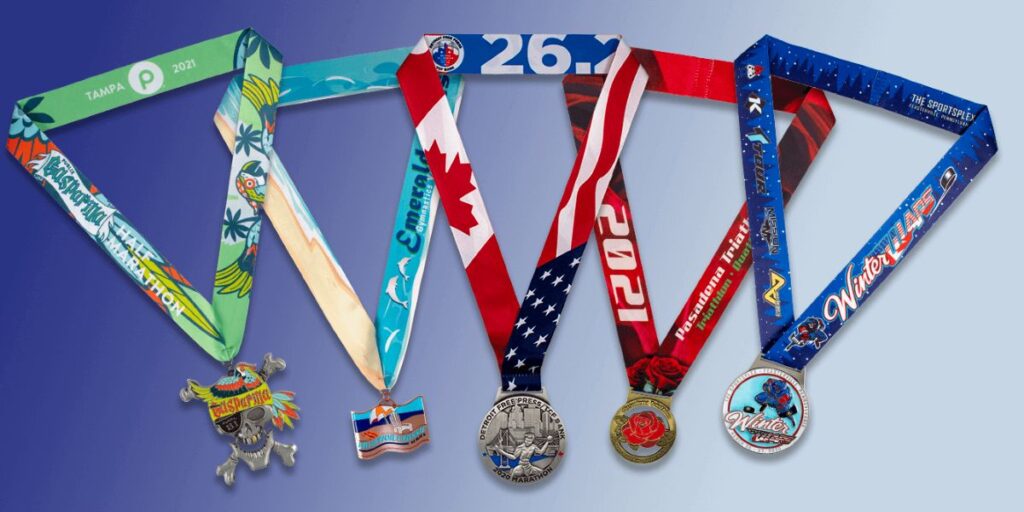
- Custom ribbons in event-specific colours with printed text or patterns
- Unique shapes beyond traditional circles, including state outlines, event mascots, or sport-specific silhouettes
The Melbourne Marathon demonstrates advanced personalisation by incorporating iconic city landmarks into their medal designs, creating instant recognition and local pride among finishers.
Digital Integration Through QR Technology
Progressive race organisers embed QR codes directly into personalised medals, transforming static awards into interactive experiences. Participants scan these codes to access their official race results, finish-line photos, performance analytics, and digital certificates. This technology extends engagement beyond race day, allowing runners to relive their achievement weeks or months later.
QR codes also facilitate social media sharing by directing finishers to pre-populated posts celebrating their.
What Are Custom Trophies and When Are They Preferred by Race Organisers?
Custom trophies serve as prestigious competition awards that race organisers typically reserve for recognising exceptional performance rather than participation. These racing trophies find their primary application in championship events, season-long competitions, and races where organisers want to distinguish top performers from the broader participant field.
Championship and Competitive Events
Race organisers favour trophies for events with clear competitive hierarchies. Championship races, regional qualifiers, and series finals commonly feature trophy personalisation to mark the significance of winning positions. Youth racing circuits particularly benefit from trophies, as young competitors often value the tangible recognition of their achievements. BMX events exemplify this approach, where the dynamic nature of the sport translates into trophy designs that capture the energy and excitement of competitive racing.
Design Elements That Reflect Sport Energy
Racing trophies distinguish themselves through designs that embody the movement and intensity of competitive events. BMX trophies might feature riders mid-jump or in aggressive cornering positions, whilst running trophies often incorporate silhouettes of athletes in full stride. The materials selected for these awards prioritise durability—essential for pieces that recipients will handle frequently and display prominently. Metal components, sturdy bases, and protective finishes ensure trophies withstand years of display without deterioration.
Personalisation Capabilities
Trophy personalisation extends beyond simple name plates. Organisers can engrave:
- Individual competitor names and finishing positions
- Event titles with specific dates
- Club logos and organisational branding
- Achievement inscriptions for special categories
- Personal best times or records broken
This level of customisation transforms a standard award into a meaningful memento that tells the story of a specific achievement.
Bulk Ordering Advantages
Clubs and large-scale event organisers benefit significantly from bulk trophy orders. Ordering multiple custom trophies simultaneously ensures design consistency across different categories whilst reducing per-unit costs. A cycling club running monthly races throughout a season can maintain visual continuity in their awards programme, reinforcing brand identity and professional presentation. Fast delivery options support tight event schedules, particularly important for organisers managing multiple competitions.
Variety Across Categories
The versatility of racing trophies allows.
How Do Custom Medals and Trophies Differ in Symbolism and Participant Appeal?
Do medals and trophies carry different symbolic meanings for race participants? Yes—medals typically represent personal achievement and completion, whilst trophies signify competitive excellence and ranking. This fundamental difference in award symbolism shapes how participants perceive and value each type of recognition.
Medals as Universal Achievement Markers
Medals serve as tangible proof that every participant crossed the finish line. Whether someone completes their first 5K in 45 minutes or a seasoned ultramarathon runner finishes in record time, the medal validates their effort. This inclusive approach to participant engagement creates a sense of accomplishment that extends beyond competitive placement.
The appeal of medals lies in their democratic nature—it doesn’t judge performance against others but celebrates individual commitment. A runner who battled through injury to complete a marathon treasures their finisher’s medal as much as the category winner values theirs. This emotional connection transforms a simple metal disc into a cherished memento of personal triumph.
Trophies as Markers of Competitive Distinction
When do trophies become the preferred recognition format? Trophies work best for acknowledging top-tier performance, age group winners, or special achievement categories. Their physical presence—often larger and more prominent than medals—signals exceptional accomplishment within a competitive field.
Trophy recognition carries different psychological weight. Receiving a trophy means standing on a podium, being photographed, and being publicly acknowledged as superior in a specific category. For youth races, this distinction can fuel athletic ambition. For championship events, trophies become coveted symbols that athletes display prominently in their homes or training spaces.
Display Preferences and Long-Term Value
The way recipients choose to showcase their awards reveals distinct preferences. Medals often hang on bedroom walls, in home offices, or get stored in memory boxes—personal spaces where they serve as private reminders of achievement. Some runners create elaborate medal displays featuring dozens of race finishes, building a visual timeline of their athletic journey.
Trophies demand different display considerations. Their three-dimensional form and typically larger size make them natural focal points on mantelpieces, trophy cabinets, or club display cases. A BMX championship trophy becomes a conversation starter, whilst a collection of race medals tells a more
What Are the Customisation Options Available for Medals Versus Trophies?
Customisation Options for Medals
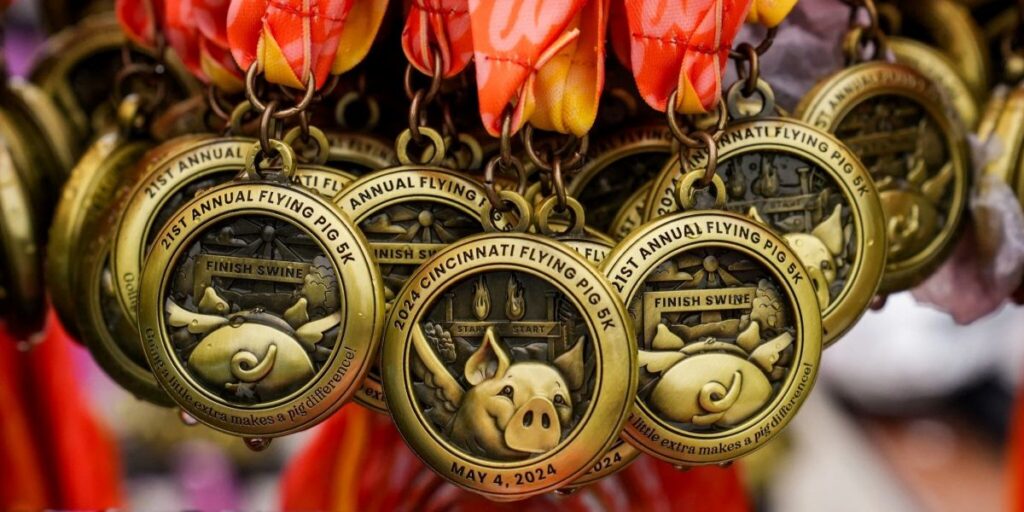
Medal customisation offers race organisers extensive creative freedom through modern production techniques. Full-colour UV printing allows for intricate designs that capture local landmarks, event themes, or sponsor branding with photographic quality. Laser engraving adds precision details like individual runner names, finishing times, or bib numbers directly onto medal surfaces.
Enamel colour filling transforms raised medal designs into vibrant, multi-dimensional awards that catch light and draw attention. Race organisers can match these colours to event branding or create striking contrasts that make medals stand out in photos. Custom ribbon options extend personalisation further, with choices in width, material, and printing that reinforce event identity.
Unique Advantage of Medal Customisation: QR Code Integration
QR code integration represents a unique advantage in medal customisation. These codes can link participants to:
- Digital race certificates with official times
- Photo galleries from the event
- Video highlights and course footage
- Social media pages for community building
- Registration portals for future events
The Melbourne Marathon demonstrates this capability at scale, embedding QR codes that connect tens of thousands of finishers to their personalised results pages and encourage social sharing.
Customisation Options for Trophies
Trophy engraving provides different but equally valuable personalisation opportunities. Traditional methods like rotary engraving create deep, permanent inscriptions that withstand years of handling and display. Laser engraving offers finer detail for complex logos or smaller text without compromising durability.
Personalised Awards in Trophy Form
Personalised awards in trophy form typically include:
- Recipient names and placement rankings
- Event titles with specific dates
- Club logos and organisational branding
- Achievement descriptions (e.g., “Age Group Champion” or “Course Record”)
- Inspirational quotes or event mottos
Trophy bases and plaques offer additional customisation surfaces. Race organisers can specify materials ranging from traditional wood to modern acrylic, each accepting different engraving or printing methods. Metal plates attached to bases allow for detailed information without cluttering the trophy’s main design.
Design Flexibility for Trophies
Design flexibility for trophies extends to structural elements. BMX events might feature trophies shaped like bikes or riders in action poses, whilst trail running awards could incorporate natural elements like rocks or trees. These three-dimensional designs create memorable personalised awards that reflect the sport’s character and energy.
How Do Budget Considerations Influence the Choice Between Medals and Trophies?
Award budget constraints often determine which recognition format makes financial sense for your event. The cost comparison medals vs trophies reveals fundamentally different pricing structures that align with distinct distribution strategies.
Medals: Cost-Effective for Large Events
Medals deliver exceptional value when ordering for hundreds or thousands of participants. Bulk production drives per-unit costs down significantly—a race with 2,000 finishers might pay £3-5 per medal when ordering at scale, creating a total award budget of £6,000-10,000. This economy of scale makes medals the practical choice for mass-participation events where every finisher receives recognition.
The pricing advantage grows more pronounced with larger quantities. Events like the Melbourne Marathon, distributing tens of thousands of medals annually, benefit from manufacturer discounts that can reduce costs to under £3 per unit. Standard customisation options—event logos, dates, and basic enamel filling—typically come included at these volumes without additional fees.
Trophies: Premium Awards for Limited Recipients
Trophies operate on an entirely different cost structure. Per-unit prices range from £15-50 or higher depending on size, materials, and complexity. A championship event awarding trophies to the top three finishers in ten categories needs only 30 pieces, creating a total spend of £450-1,500. The higher individual cost becomes manageable because quantities remain limited.
Quality trophies justify their premium pricing through superior materials and construction. Substantial bases, detailed figurines, and durable finishes create awards that withstand years of display. Engraving costs add £2-5 per trophy but provide personalisation that medals achieve through different methods.
Budget Calculations for Race Organisers
Race organisers working with tight budgets face a clear calculation:
- Large participant events: Medals at £3-5 each for 1,000+ finishers
- Elite competitions: Trophies at £20-40 each for 10-50 winners
- Hybrid approach: Medals for all participants (£3-5 each) plus trophies for category winners (£20-40 each)
The hybrid model appears frequently in well-funded races. Every participant receives a finisher’s medal while age group winners and overall champions take home trophies. This strategy requires careful budget allocation—
Which Award Type Supports Sustainability Goals More Effectively?
Do medals offer better environmental credentials than trophies? Custom event medals are increasingly leading the sustainability race through innovative material choices. Medals made from wood and those crafted from recyclable zinc alloys have become standard offerings from specialist suppliers, allowing race organisers to align awards with environmental commitments whilst maintaining quality and visual appeal.
What makes eco-friendly medals a sustainable choice? The shift towards sustainable materials in medal production addresses multiple environmental concerns. Wooden medals sourced from responsibly managed forests provide a renewable alternative to traditional metal-only designs, often featuring laser-engraved details that eliminate chemical-intensive printing processes. Zinc alloy medals offer recyclability at end-of-life, reducing landfill contributions when participants eventually dispose of older awards.
Can trophies match medals’ sustainability credentials? Recyclable trophies present environmental challenges due to their composite construction. Traditional trophy designs combine multiple materials—plastic bases, metal columns, and acrylic or resin figurines—making separation and recycling difficult. Some manufacturers now offer mono-material trophies or designs using recycled content, though these remain less common than sustainable medal options.
How does production volume affect environmental impact? Large-scale medal production for mass-participation events creates opportunities for sustainable practices through economies of scale. Manufacturers can optimise material usage, reduce waste through precision cutting, and implement efficient logistics when producing thousands of identical medals. Trophy production typically involves smaller batches with more varied designs, limiting these environmental efficiencies.
What about packaging and distribution considerations? Medals require minimal packaging—often just protective sleeves or simple boxes—reducing material waste and shipping weight. Their flat profile allows compact stacking during transport, lowering carbon emissions per unit. Trophies demand more substantial protective packaging due to protruding elements and fragile components, increasing both material consumption and transportation footprint.
Are there emerging sustainable innovations in award production? Recent developments in sustainable awards include medals incorporating recycled ocean plastics, biodegradable ribbon materials, and carbon-neutral manufacturing processes. Some suppliers now offer carbon offset programmes specifically for event medals, allowing organisers to neutralise the environmental impact of their awards entirely. Trophy manufacturers have been slower to adopt similar innovations, though some now provide plant-based resin options for figurines. You may like to visit https://www.australiantrainingawards.gov.au/award/innovation-vet-award to get more about innovation in VET awards.
How Do Medals and Trophies Contribute Differently to Event Marketing Strategies?
Can medals generate more online visibility than trophies?
Custom event medals excel at creating social media engagement opportunities that extend your event’s reach far beyond race day. Participants wearing or displaying their medals naturally photograph and share these moments across Instagram, Facebook, and Strava, transforming each finisher into a brand ambassador.
The visual appeal of medals makes them ideal for digital sharing. When you incorporate local cultural elements—such as Sydney’s harbour bridge silhouette or Melbourne’s laneways—into your medal design, you create conversation starters that participants proudly showcase online. These posts typically generate comments, likes, and shares from friends and family who didn’t attend, effectively advertising your event to potential future participants at no additional cost.
QR codes embedded in medals amplify this effect by directing social media traffic to your event website or results page. The Melbourne Marathon leverages this technology to maintain engagement weeks after the event concludes, keeping their brand visible during the crucial registration period for the following year.
How do branded trophies strengthen event prestige differently?
Trophies serve as powerful event marketing awards through their physical presence in club rooms, homes, and offices where they remain on permanent display. Unlike medals that might be stored away, branded trophies maintain continuous visibility, reinforcing your event’s identity through distinctive designs that become synonymous with excellence in your sport.
Championship trophies create aspirational marketing that motivates athletes to return year after year. When your trophy design reflects the dynamic energy of your specific sport—whether through BMX-inspired shapes or trail running motifs—you establish a visual identity that distinguishes your event from competitors. This recognition builds over time as athletes collect multiple trophies from your series.
Clubs ordering bulk trophies with consistent branding create a unified visual language that strengthens their organisational identity. These awards appear in team photos, annual reports, and promotional materials, providing repeated exposure that builds brand recognition within the racing community.
Which award type generates better word-of-mouth marketing?
Medals generate immediate buzz through their mass distribution and shareability. When thousands of participants simultaneously post finisher photos, your event trends locally on social platforms, creating concentrated bursts of visibility that attract media attention and sponsor interest. You may like to visit https://magnoliaadams.com/7-creative-ways-to-use-personalised-lapel-pins-to-promote-your-brand/ to get more about 7 creative ways to use personalised lapel pins to promote your brand.
What Factors Should Race Organisers Consider When Choosing Between Custom Medals and Trophies?
Award decision factors race organisers must evaluate extend beyond simple preference. The right choice depends on multiple interconnected elements that shape both participant experience and event success.
Does Event Type and Participant Volume Determine Award Selection?
Mass participation events naturally favour medals due to their scalability and cost-effectiveness. A 5K community run with 2,000 finishers requires affordable awards that maintain quality whilst staying within budget constraints. Medals meet this need perfectly, allowing every participant to receive recognition regardless of finishing position.
Competitive championships and elite races benefit from trophy awards that distinguish performance tiers. A regional cycling championship with 50 competitors across five categories can provide meaningful trophies to podium finishers without excessive expense. The smaller recipient pool makes trophies financially viable whilst elevating the perceived value of achievement.
Trail running ultramarathons often employ a hybrid approach—medals for all finishers acknowledging the extreme challenge, with trophies reserved for age group winners and course record breakers. This dual strategy satisfies both participation recognition and competitive excellence.
What Emotional Impact Should Awards Create?
The psychological connection participants form with their awards influences future registration decisions. Medals create inclusive celebration, validating every runner’s personal journey whether they finished first or last. This universal recognition builds community spirit and encourages repeat participation from recreational athletes.
Trophies generate aspirational motivation by representing exclusive achievement. Youth BMX racers display their trophies prominently, creating tangible goals for improvement. The physical presence of a trophy in a home or club reinforces accomplishment in ways that inspire continued dedication to the sport.
Consider your participant demographics when evaluating emotional impact:
- First-time runners value completion medals as proof of their achievement
- Competitive athletes seek trophies that validate their training investment
- Family events benefit from medals that children can wear immediately
- Club championships require trophies that represent sustained excellence
How Do Budget Constraints Shape Award Choices?
Financial planning determines feasible award options for race organisers. Bulk medal orders for 1,000+ participants typically range from £2-8 per unit depending on customisation complexity. This predictable per-participant cost
Conclusion
The decision between custom event medals and trophies shapes how participants remember your race long after crossing the finish line. Choosing race awards that match your event’s character, participant expectations, and organisational priorities creates lasting positive impressions that extend beyond race day.
Race organisers who understand the distinct roles of medals and trophies can craft award strategies that resonate with their specific audience. Mass-participation events thrive when every finisher receives a tangible reminder of their achievement through medals, which can be tailored to reflect the unique aspects of the race as suggested in this guide on how to create running medals for your race. On the other hand, competitive races gain prestige through carefully selected trophies that honour exceptional performance. The custom medals vs trophies summary reveals no universal winner—only the right choice for your particular circumstances.
Successful award selection balances multiple considerations:
- Participant expectations based on race type and competitive level
- Budget allocation reflecting participant numbers and award distribution strategy
- Brand representation through design elements that reinforce event identity
- Sustainability commitments aligned with environmental values
- Marketing potential for post-event engagement and future promotion
This Custom Event Medals vs. Trophies: A Comparative Look for Race Organisers demonstrates that thoughtful award selection strengthens participant satisfaction whilst supporting broader event objectives. Medals create inclusive celebration for mass participation, trophies establish competitive hierarchy for elite performance, and strategic combinations of both can serve diverse participant segments within a single event.
Race organisers who invest time in understanding their participants’ motivations, event positioning, and resource constraints will select awards that amplify the emotional impact of race day. The right award becomes more than recognition—it transforms into a cherished memento that participants display proudly, share enthusiastically, and remember fondly when considering their next race registration.